
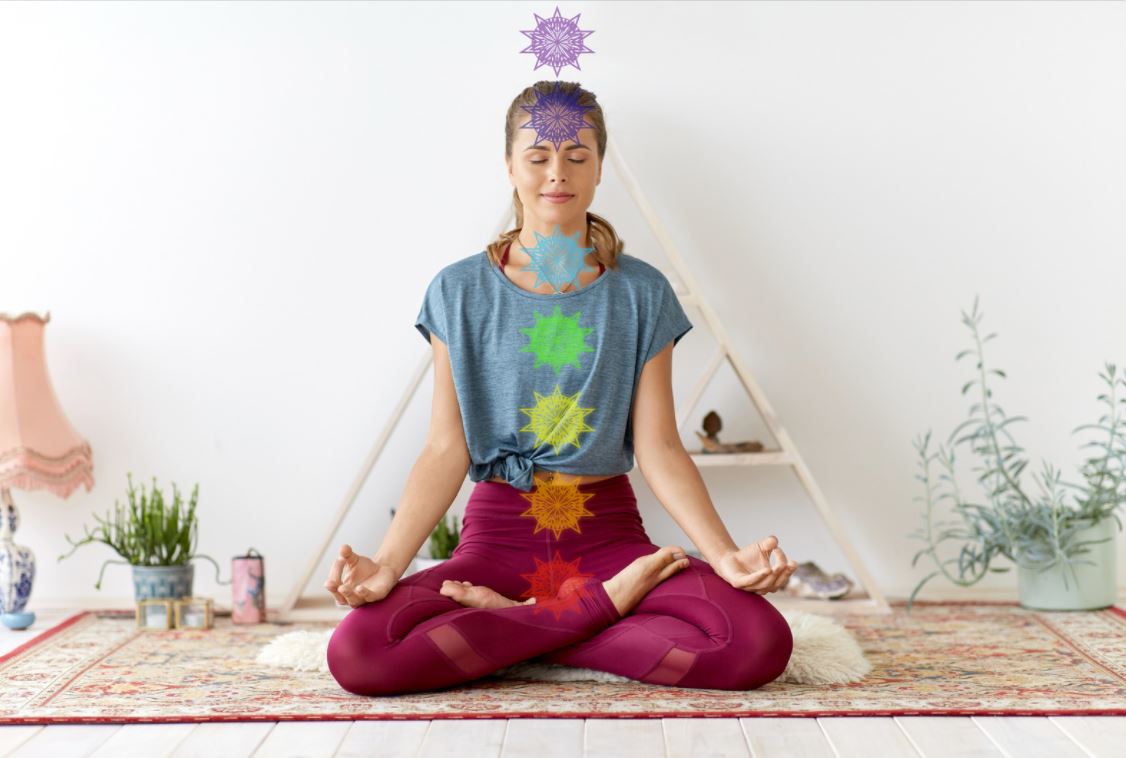
Chakras are subtle-body concepts found in several South Asian religious and contemplative traditions. The Sanskrit word cakra can mean “wheel” or “disc,” but a chakra is not a physical wheel, gland, organ, or structure that clinicians can see on a scan.
The familiar modern diagram of seven vertically arranged centers, each with a rainbow color, body location, personality theme, crystal, and yoga pose, is one influential synthesis—not a single unchanged system shared by all Hindu, Buddhist, tantric, yogic, or modern healing traditions.
Tradition, modern interpretation, and clinical fact
| Type of statement | Example | How to present it |
|---|---|---|
| Religious or historical | Some tantric and yogic texts describe subtle centers used in ritual and meditation | Name the tradition and source; do not call one map universal |
| Modern spiritual | A practitioner associates green with the heart chakra and compassion | Describe it as a symbolic belief or practice |
| Personal experience | Someone feels calmer while visualizing color | Report the experience without proving its cause |
| Clinical | A symptom is caused by a blocked chakra | Unsupported; symptoms require ordinary health assessment |
Where chakra ideas come from
Chakra systems developed within complex South Asian histories of yoga, tantra, ritual, philosophy, and religion. Different texts and lineages describe different numbers, placements, deities, sounds, elements, and purposes. Geoffrey Samuel’s Cambridge University Press book The Origins of Yoga and Tantra provides historical context for traditions that are often simplified in modern wellness culture.
Reiki is a modern Japanese practice, not a school that “shows the ways of Hinduism.” Some contemporary Reiki practitioners use chakra language, but combining the systems does not make them historically identical. Likewise, modern yoga classes may mention chakras without teaching a specific religious lineage.
The popular seven-chakra map
| Common English name | Common location in modern charts | Common reflection theme |
|---|---|---|
| Root | Base of the torso or spine | Safety, stability, and basic needs |
| Sacral | Lower abdomen | Feeling, creativity, pleasure, and relationship |
| Solar plexus | Upper abdomen | Choice, confidence, and agency |
| Heart | Center of the chest | Care, connection, grief, and compassion |
| Throat | Throat area | Expression, listening, and truthfulness |
| Third eye | Between the eyebrows | Attention, imagination, and perspective |
| Crown | Top of or above the head | Meaning, transcendence, and belonging |
These themes are a modern-accessible summary, not anatomy. Colors, stones, developmental ages, foods, poses, and psychological traits vary across teachers and may be absent from older systems.
What chakras are not
Chakras should not be presented as glands that control organs, a measurable energy network, or a diagnostic explanation for anxiety, depression, addiction, digestive symptoms, bladder symptoms, sexual desire, jealousy, codependency, speech problems, vision changes, or pain. Having more or less sex, food, ambition, emotion, or confidence does not prove that a chakra is overactive or underactive.
No healer can confirm a disease by reading a chakra. Seek an appropriate licensed clinician for new, severe, persistent, or worsening physical or psychological symptoms. Use urgent or emergency care for chest pain, severe breathing trouble, fainting, stroke signs, sudden confusion, suicidal intent, or another immediate danger.
Chakra practice versus meditation research
Research may study meditation, mindfulness, yoga, relaxation, or movement programs. That does not validate chakras as anatomical energy centers. The National Center for Complementary and Integrative Health meditation overview describes a varied evidence base, notes limited research on harms, and advises people not to replace or postpone conventional care.
The NCCIH yoga guide describes yoga as an ancient and complex practice rooted in Indian philosophy and notes that styles range from gentle to physically demanding. Evidence about a yoga program’s effects is not evidence that a crown chakra opened or a crystal healed an organ.
How to use a chakra map responsibly
- Name the frame. Say “In this modern seven-chakra system…” rather than “The body has seven proven energy centers.”
- Use themes as questions. “Root” can prompt a check of housing, food, money, and safety.
- Separate symbol from symptom. A tight throat may feel symbolically connected to unsaid words, but it can also need medical assessment.
- Keep practices optional. No color, stone, pose, mantra, or hand position is required.
- Respect living traditions. Learn names, pronunciations, and ritual context from qualified sources without claiming ownership or universality.
- Track outcomes. Record what you did and what changed, including no change or increased distress.
For a practical seven-theme self-reflection, use Keep Your Chakras Balanced. For a time-limited guided practice with adaptations, use How Chakra Meditation Helps.
Colors, crystals, and poses
A color or stone can serve as a reminder, decorative object, or ritual focus. It does not diagnose blockage, emit a clinically established healing force, or replace care. Check objects for choking, breakage, toxicity, skin, pet, and child hazards, and set a budget before buying anything.
Yoga poses require physical adaptation. Headstand, shoulder stand, deep backbends, and other demanding positions are not necessary to “open” a chakra and may be unsuitable for some people. Choose a qualified instructor when needed and stop for pain, numbness, faintness, or breathlessness.
How to evaluate a teacher or healer
Ask which tradition or modern system they teach, what training they have, what a session includes, what it costs, and how they handle uncertainty or adverse reactions. Ethical practitioners do not diagnose disease, guarantee enlightenment, tell clients to stop medication, predict punishment, demand secrecy, or sell escalating cleanses to prevent harm.
A useful teacher can explain when language is historical, symbolic, experiential, or evidence-based. They should be comfortable saying, “I do not know.”
Frequently asked questions
Are chakras scientifically proven parts of the body?
No. Chakras are religious, contemplative, and symbolic concepts rather than anatomical structures established by clinical science.
Why do chakra charts disagree?
Different traditions and modern teachers use different numbers, locations, colors, deities, sounds, elements, and purposes. The popular seven-color chart is not the only chakra system.
Can a blocked chakra cause physical or mental illness?
There is no clinical test showing that a blocked chakra causes illness. New, severe, persistent, or worsening symptoms deserve assessment from an appropriate health professional.
Can I use chakras without making health claims?
Yes. Clearly frame them as spiritual symbols or reflection themes, keep practices optional, separate observations from interpretations, and use ordinary health and safety care when needed.