
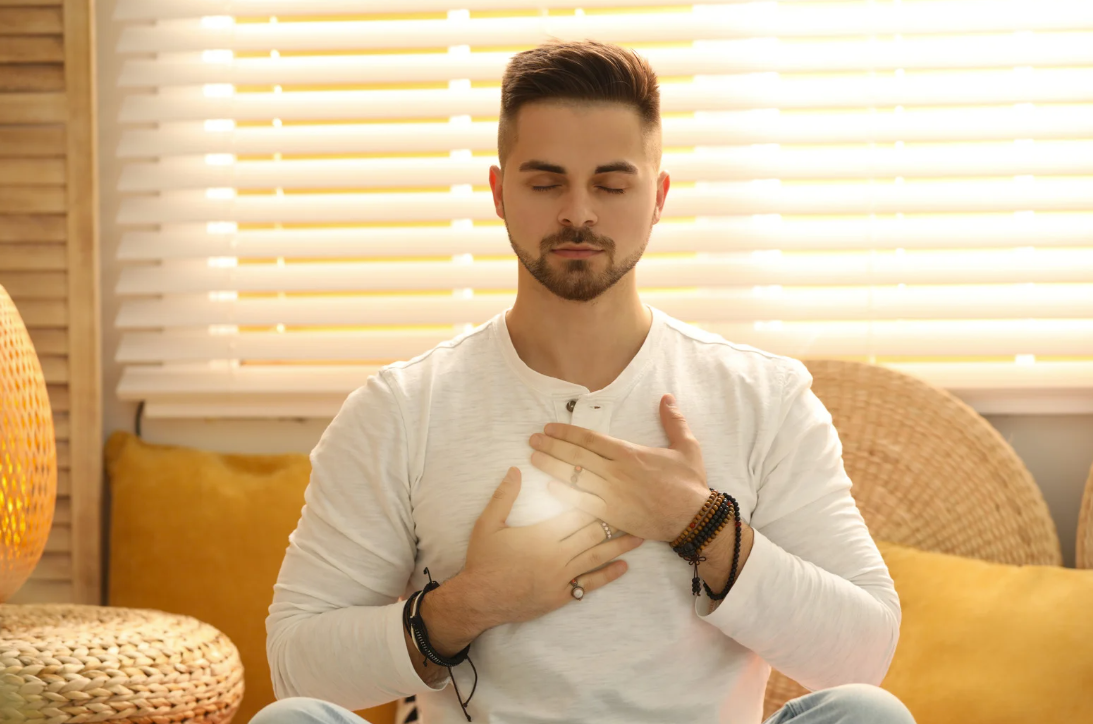
Chakra balancing is a spiritual practice, not a medical diagnosis. In several Hindu and Buddhist traditions, chakras are subtle-body symbols used in meditation and ritual. Modern seven-color charts are one interpretation among many, and there is no clinical test that shows a chakra is open, blocked, weak, or responsible for an illness.
You can still use the seven-chakra map as a structured reflection tool. The useful question is not “Which invisible center is causing my problem?” but “What am I noticing, what matters to me, and what small action is safe today?”
A seven-chakra reflection map
| Chakra symbol | Reflection theme | Grounded action |
|---|---|---|
| Root | Safety, stability, and basic needs | Check food, sleep, housing, money, physical safety, and practical support |
| Sacral | Feeling, pleasure, creativity, and boundaries | Name one feeling and choose a consensual, affordable creative activity |
| Solar plexus | Choice, confidence, and responsibility | Complete one controllable task or set one respectful limit |
| Heart | Care, grief, connection, and compassion | Offer or request specific support without erasing your own needs |
| Throat | Expression and listening | Write a clear sentence, ask a question, or listen before answering |
| Third eye | Attention, imagination, and perspective | Separate observations, interpretations, wishes, and evidence |
| Crown | Meaning, values, and belonging | Reflect, pray, meditate, study, or serve in a way consistent with your beliefs |
These pairings are prompts rather than proven anatomy. Traditional and modern chakra systems do not all use the same number, colors, locations, meanings, or practices. For a broader background and terminology guide, read A Guide to What the Chakras Really Are. Geoffrey Samuel’s Cambridge University Press book The Origins of Yoga and Tantra also places yoga and tantra within their complex historical settings rather than treating one modern chart as timeless or universal.
Try a ten-minute chakra check-in
- Arrive for one minute. Sit, stand, or lie in a position that works for your body. Keep your eyes open if closing them feels uncomfortable.
- Breathe comfortably for two minutes. Do not force a deep breath, hold your breath, or continue if you feel faint. The NHS breathing exercise recommends letting the breath move into the belly only as deeply as is comfortable and keeping it gentle and regular.
- Scan the seven themes for four minutes. Spend about thirty seconds on each row in the table. Notice thoughts, emotions, and body sensations without declaring what caused them.
- Choose one action for two minutes. Pick a practical step you can complete today. Examples include eating a meal, paying one bill, making an appointment, sending an honest message, or stepping outside.
- Close for one minute. Write what you noticed and the action you chose. Then return to ordinary activity.
You may visualize a color, repeat a personally meaningful phrase, use beads, listen to music, or hold a stone. Those objects can support attention or ritual, but a crystal does not diagnose or treat disease, and a visualization does not prove that energy has physically moved.
Use affirmations that allow reality
An affirmation works better as a chosen direction than a guarantee. “I am completely safe” may be false in an unsafe situation. “I will check what I need to feel safer” leaves room for evidence and action.
- Root: “I can take one step toward stability.”
- Sacral: “My feelings contain information, not commands.”
- Solar plexus: “I can choose what is mine to do.”
- Heart: “Care for others can include care for me.”
- Throat: “I can speak clearly and listen carefully.”
- Third eye: “I can test an interpretation before believing it.”
- Crown: “I can seek meaning without demanding certainty.”
Do not turn discomfort into a chakra diagnosis
Stress, fear, fatigue, pain, low mood, dizziness, digestive symptoms, sexual concerns, and changes in speech or concentration can have many causes. Saying they are caused by a blocked chakra may delay appropriate assessment. Seek qualified medical or mental-health care for new, severe, persistent, or worsening symptoms. Use emergency services for immediate danger, severe breathing trouble, chest pain, fainting, stroke signs, suicidal intent, or another urgent condition.
Meditation is not risk-free for everyone. The National Center for Complementary and Integrative Health notes that safety research is limited and that negative experiences have been reported; it also advises against using meditation to replace or postpone conventional care. Stop and reorient if a practice increases panic, dissociation, traumatic memories, unusual perceptions, or inability to function.
A weekly balance record
Once a week, make seven short rows. For each theme, record one observation, one need, and one next action. Use ordinary language: “I slept five hours,” “I feel lonely,” or “I avoided a difficult email.” Avoid scoring invisible energy as fact. At the next review, record what changed and what did not.
This method protects against confirmation bias because it includes neutral and disappointing outcomes. It also prevents one ritual from expanding into hours of checking, expensive products, or repeated readings. Set a time and spending limit before you begin. No ethical practitioner should claim that only a paid cleansing can prevent illness, loss, a curse, or spiritual punishment.
What chakra balance can and cannot mean
“Balanced” can be a personal shorthand for living closer to your values while responding to real needs. It cannot confirm that every feeling is intuitive, that a color has healed an organ, that a mantra guarantees an outcome, or that distress reflects spiritual failure.
If you want a body-based present-moment routine without chakra symbolism, try these Grounding Techniques. Choose the framework that helps you act with more clarity, consent, and care—not the one that makes the largest promise.
Frequently asked questions
Are chakras scientifically proven parts of the body?
No. Chakras are spiritual and symbolic concepts, not anatomical structures established by clinical science. They can be used for reflection without presenting them as a diagnosis.
Can a blocked chakra cause anxiety or illness?
There is no clinical test showing that a blocked chakra causes anxiety or physical disease. Persistent, severe, new, or worsening symptoms deserve assessment from an appropriate health professional.
Do I need crystals, colors, or mantras to balance chakras?
No. They may support personal ritual or attention, but they are optional and do not prove that energy moved or that a condition was treated. A simple reflection and practical action can be enough.
How often should I do a chakra check-in?
Use a bounded schedule that supports rather than disrupts daily life, such as ten minutes once or twice a week. Stop or shorten the practice if it increases distress, compulsive checking, unusual perceptions, or avoidance of needed care.