
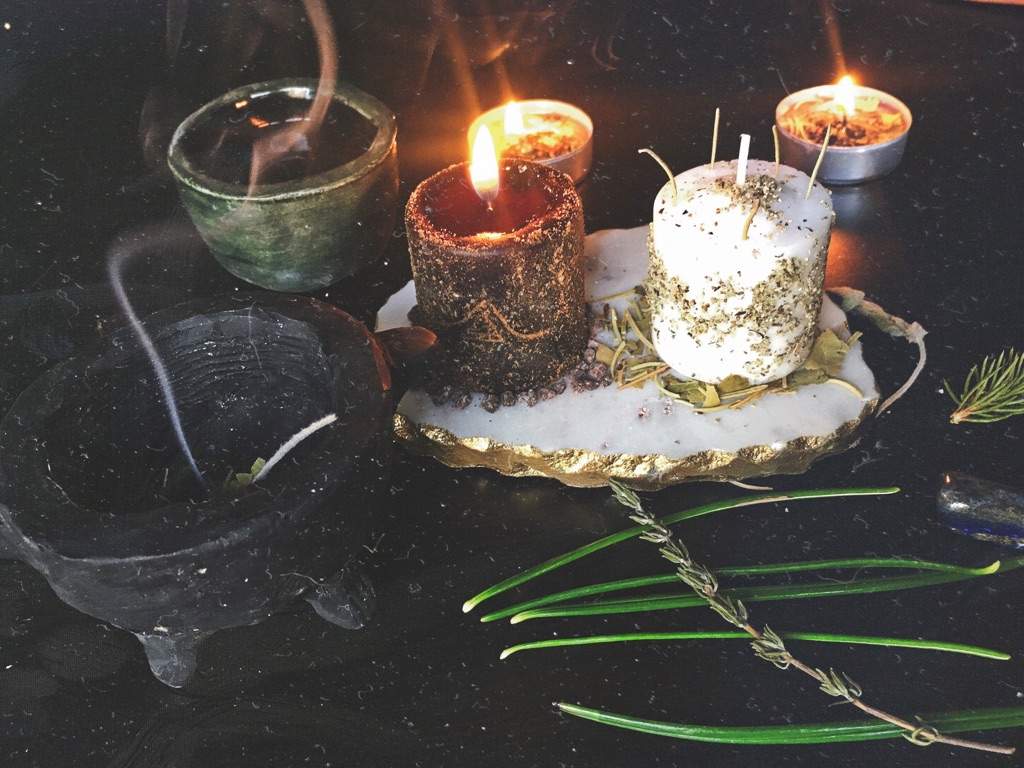
Candle divination—sometimes called ceromancy, pyromancy, or flame reading—uses a candle’s flame, smoke, wax, or residue as a symbolic prompt. Traditions differ, so there is no universal code in which a tall flame always means “yes” or smoke moving left always predicts one outcome.
Safety comes before interpretation
Use a stable, heat-resistant surface away from curtains, paper, bedding, hair, sleeves, plants, and decorations. Keep the candle where children and pets cannot reach it. Never leave it unattended, carry it while lit, use it near oxygen equipment or flammable vapors, or fall asleep while it burns. Follow the manufacturer’s instructions and keep a suitable way to extinguish the flame nearby.
Check that smoke alarms work. Stop if the container cracks, the flame grows unusually high, the wax overheats, the wick mushrooms heavily, or nearby material becomes hot. Snuff the flame safely; do not use water on hot wax or an oil flame.
Smoke and fragrance can irritate eyes and airways or trigger symptoms in some people. Ventilate appropriately, choose an unscented option, shorten the exercise, or use a battery candle when anyone has asthma, migraine, fragrance sensitivity, respiratory illness, or another relevant concern. Persistent breathing difficulty, chest pain, severe dizziness, confusion, or signs of fire require practical or urgent help—not spiritual interpretation.
Why flames behave differently
| What you observe | Common physical possibilities | Safer response |
|---|---|---|
| Tall or bright flame | Long wick, abundant fuel, airflow, or candle formulation. | Extinguish if it is outside the maker’s expected range; trim only after cooling. |
| Small or weak flame | Short or drowning wick, wax pool, low airflow, or wick quality. | Do not interpret it as failure; check the candle and instructions. |
| Flickering or leaping | Drafts, vents, movement, debris, wick length, or uneven fuel. | Remove hazards and extinguish an unstable flame. |
| Curved or leaning flame | Air movement, off-center wick, container heat, or uneven melting. | Move away from drafts after extinguishing and cooling. |
| Dark smoke or soot | Incomplete combustion, long wick, fragrance, dyes, debris, or poor airflow. | Extinguish, ventilate, and inspect rather than continuing the ritual. |
| Smoke drifts one way | Ventilation, temperature differences, movement, or an open door or window. | Note the draft; do not treat direction as a command. |
The same candle can behave differently as the wax pool changes. Repeating a ritual may produce a different flame without any change in prayer, intention, or “energy.” Physical variation is therefore a poor basis for a yes-or-no decision.
Use interpretation as a reflection prompt
If candle symbolism is meaningful to you, define it as metaphor before lighting the candle. A steady flame might prompt “What am I sustaining?” A small flame might prompt “Which plan needs more resources?” A shifting flame might prompt “What conditions around me are changing?” These questions invite reflection without claiming that combustion predicts the future.
Separate three layers in your notes:
- Observation: “The flame leaned toward the window for twenty seconds.”
- Physical explanation: “The window was slightly open and the curtain moved.”
- Optional meaning: “I used movement as a prompt to consider flexibility.”
Do not jump from observation to certainty. “The smoke moved toward me” does not establish that an angel heard a prayer. “The flame jumped” does not show that a ritual has twice the energy or will either succeed completely or fail. “Black smoke” is a combustion warning, not proof that negative energy is leaving.
A ten-minute candle reflection
- Choose one low-stakes question that does not require a prediction.
- Place the candle safely, remove drafts and hazards, and set a timer.
- Write what you observe before assigning meaning.
- List at least two ordinary explanations for changes in flame or smoke.
- Use one symbolic prompt to identify a safe action you control.
- Extinguish the candle, confirm the wick is out, and leave the area safe.
For a belief-neutral ritual that also covers candle limits and message filters, see how to listen for spirit-guide themes safely. If your real goal is planning rather than divination, use our evidence-aware manifestation framework to connect hopes with obstacles and practical steps.
Decisions a flame should not make
Do not use candle behavior to decide whether to take medication, seek care, leave a safe home, report a crime, invest money, gamble, contact an estranged person, test a pregnancy, or judge whether someone is faithful or dangerous. Get relevant evidence and qualified advice. In an emergency, respond to the real hazard.
Consent also matters. A symbolic ritual cannot reveal another person’s private thoughts or override their “no.” Do not perform fire rituals in someone else’s home, dormitory, workplace, hotel, or rented space without permission and compliance with local rules.
Watch for commercial pressure
Be cautious when a practitioner says a weak flame, curved flame, soot, or extinguished candle proves a curse, blockage, hostile person, or spiritual emergency. End the transaction if the proposed solution is urgent paid cleansing, repeated candles, expensive supplies, secrecy, or isolation from people you trust.
Set a materials budget before buying anything. An ordinary candle or battery light can support reflection; rare colors, oils, herbs, crystals, or branded kits are not required for a meaningful practice. Never apply unknown oils to skin, ingest ritual products, or burn materials that are not designed for that purpose.
Frequently asked questions
What does a strong candle flame mean?
Physically, it may reflect wick length, fuel, airflow, or candle design. Some traditions use a strong flame as a positive symbol, but it does not verify a “yes,” divine approval, or a successful manifestation.
Does black candle smoke mean negative energy is leaving?
No. Dark smoke or soot commonly points to incomplete combustion, a long wick, debris, fragrance, dyes, or airflow. Extinguish and inspect the candle, ventilate, and treat the observation as a safety issue first.
Can smoke direction answer a question?
Smoke direction is strongly affected by drafts, ventilation, temperature, and movement. You may use it as an optional metaphor, but it is not a reliable answer or instruction.
Can I practice candle divination without an open flame?
Yes. A battery candle, a candle image, or a brief visualization can provide a symbolic focus without combustion. This is preferable where flames are prohibited or when smoke, pets, children, oxygen, sleepiness, or mobility creates risk.