
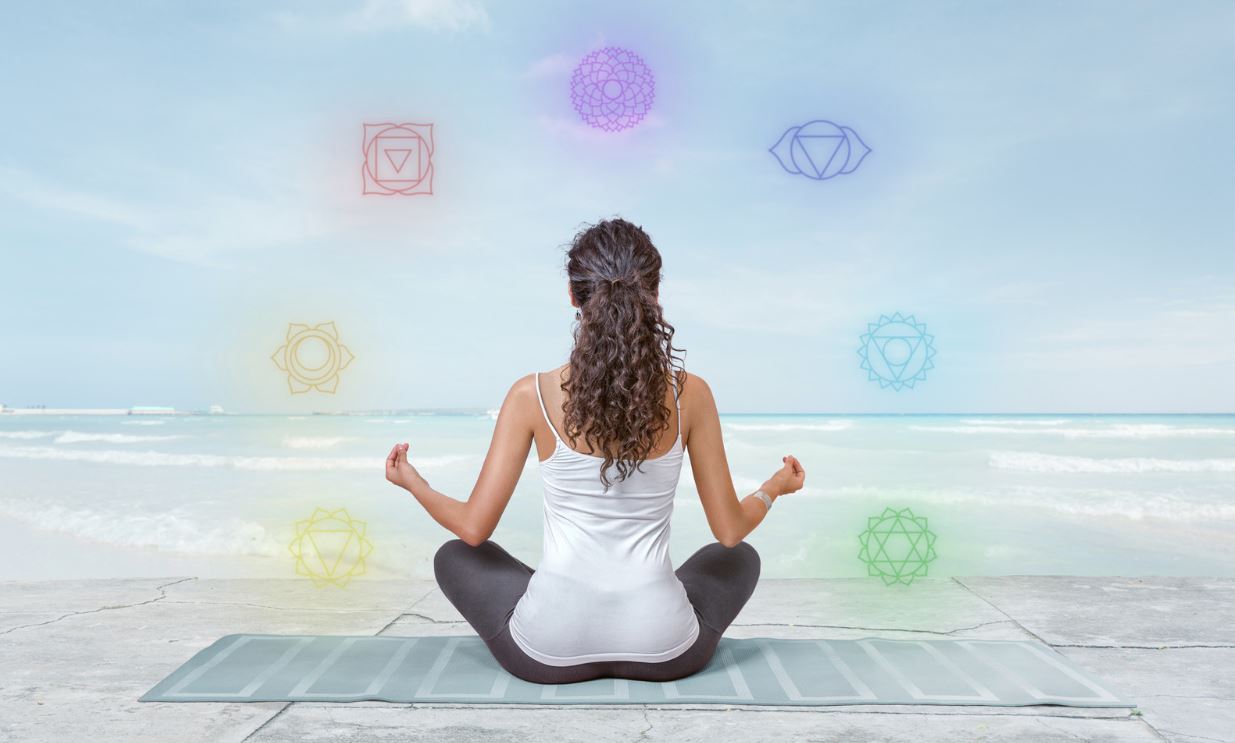
Chakra meditation uses images, locations, colors, sounds, or themes associated with subtle-body traditions as anchors for attention. It can be spiritually meaningful, but it does not prove that invisible centers are open or blocked, and it cannot diagnose or treat illness.
This article owns the practical meditation routine. For the broader seven-theme reflection map, see Keep Your Chakras Balanced. The practices below are optional and adaptable; no particular hand shape, mantra, color, or sequence is required for safety or worthiness.
Choose a practice level
| Level | Time | Best fit |
|---|---|---|
| Orienting | 3 minutes | New practice, limited energy, or a busy day |
| Seven-theme scan | 10 minutes | A bounded personal reflection |
| Guided class | Varies | People who want instruction, adaptation, or community |
A ten-minute chakra meditation
- Prepare for one minute. Sit, stand, or lie in a position that works for your body. Use normal lighting, silence notifications, and set a timer.
- Orient for one minute. Notice the room, the date, and the points supporting your body. Keep your eyes open if closing them increases distress or detachment.
- Breathe comfortably for one minute. Let the breath stay gentle. Do not force deep inhalations, hold the breath, or continue through dizziness. The NHS breathing exercise advises breathing only as deeply as is comfortable.
- Move through seven themes for five minutes. Spend roughly forty seconds on safety, feeling, choice, care, expression, perspective, and meaning. You may imagine traditional colors, repeat a chosen phrase, or simply name each theme.
- Choose one action for one minute. Examples include eating, resting, asking a question, making an appointment, setting a boundary, or checking a fact.
- Close for one minute. Look around, move gradually, and write one observation. Return to ordinary activity before interpreting the experience.
Use imagery as imagery
Red, orange, yellow, green, blue, indigo, and violet may serve as attention cues. Seeing a color in the mind is a visualization, not proof that energy moved. Not seeing a color does not show blockage, failure, or spiritual impurity.
Likewise, warmth, tingling, heaviness, lightness, tears, calm, boredom, or distraction can occur for many reasons. Record the sensation without assigning a cause. New, severe, persistent, or worsening symptoms need appropriate medical assessment.
Mantras and hand positions are optional
A repeated sound can help hold attention, but there is no need to pronounce an unfamiliar Sanskrit term as if one universal script exists. Chakra systems and practices vary across traditions. If you use a mantra from a living tradition, learn its context from a qualified teacher and avoid claiming that the sound guarantees healing or supernatural power.
Hands can rest wherever they are comfortable. Stop a position that causes pain, numbness, or strain. A mudra may have ritual meaning, but it is not required to keep energy flowing correctly.
What research can and cannot support
Research generally studies meditation or mindfulness programs, not whether chakras are anatomical energy centers. The National Center for Complementary and Integrative Health reports possible benefits in some contexts but also notes inconsistent study quality, limited harm research, and reported negative experiences. It advises against replacing or postponing conventional care.
Yoga may include postures, breathing, and meditation, but benefits depend on the practice and population. The NCCIH yoga evidence and safety guide describes yoga as a complex practice rooted in Indian philosophy and recommends appropriate instruction and adaptation. A meditation does not independently cause weight loss, cure depression, improve memory, or guarantee better decisions.
Adapt the practice for safety
- Do not meditate while driving, swimming, cooking, operating machinery, or supervising someone who needs attention.
- Use a chair, wall, cushion, mobility aid, or eyes-open practice when helpful.
- Do not push through pain, breathlessness, faintness, panic, dissociation, flashbacks, or unusual perceptions.
- Avoid intense breathwork, prolonged fasting, sleep deprivation, hyperventilation, or substance use to force an experience.
- Discuss adaptations with an appropriate clinician or qualified instructor when pregnancy, injury, disability, cardiovascular conditions, breathing conditions, trauma, or other health needs apply.
If attention practices become overwhelming, these Grounding Techniques offer eyes-open, present-moment alternatives.
When to pause and seek help
Stop the practice if it increases panic, agitation, detachment, traumatic memories, sleep loss, compulsive checking, or inability to function. Seek qualified care for persistent distress or new perceptual experiences. Use urgent or emergency help for immediate danger, sudden confusion, severe symptoms, or commands to harm.
Leave any teacher who says discomfort proves cleansing, asks you to stop medication, guarantees a cure, demands escalating payments, or claims only they can remove a blockage. Spiritual practice and health care can coexist without coercion.
A simple practice record
After each session, record the duration, method, observations, distress level before and after, and one practical action. Review after a week. Include neutral or unpleasant outcomes as well as helpful ones. Shorten, adapt, or stop based on what actually happened.
Frequently asked questions
Does chakra meditation clear blocked energy?
That is a spiritual interpretation, not a clinically established process. Meditation may support attention or reflection for some people, but it does not diagnose or clear a medical condition.
Do I have to use specific colors or mantras?
No. Colors, sounds, and hand positions are optional symbolic anchors, and traditions vary. Choose a simple focus that is respectful, comfortable, and safe.
Can chakra meditation treat depression or help me lose weight?
It should not be presented as a treatment or guarantee for either. Use qualified health care for depression and individualized weight concerns, and do not postpone care because of a chakra explanation.
How long should chakra meditation last?
Start with three to ten minutes and use a timer. The useful duration is one that supports daily functioning without increasing distress, pain, compulsive practice, or avoidance of needed care.